
Typesetting of doctoral dissertations, habilitation monographs, and academic publications. Professional scholarly typesetting with tables, formulas, and extensive critical apparatus.
Typesetting doctoral dissertations and scholarly works is a discipline where every typographic detail matters: from the numbering style of footnotes, through the bibliography format, to the alignment of columns in tables. We have been typesetting doctoral dissertations, habilitation monographs, collective works, and academic textbooks for over twenty-five years. We know the requirements of university presses, academic councils, and scholarly institutions because we have worked directly with many of them.
Doctoral dissertations and habilitation monographs are publications upon which academic careers depend. We typeset them with utmost care: we ensure compliance with the requirements of both publishers and universities, the correctness of the footnotes and bibliography apparatus, the readability of tables, and the consistency of formatting from the first page to the last.
Mathematical, chemical, and logical formulas require tools beyond standard InDesign functions. We work with material in LaTeX, MathType, and the Word equation editor. We ensure consistent notation, correct alignment, and numbering of formulas throughout the publication.
Technical editing involves standardizing the structure of chapters, verifying the consistency of footnotes and bibliography, controlling the numbering of tables, illustrations, and formulas, and checking internal cross-references. This is the stage that determines whether a publication meets the publisher's editorial standards.
The final stage of work on a monograph: preflight, font embedding, color conversion to CMYK, bleed control, and generating PDF/X files consistent with the printing house's specifications. We also provide InDesign source files if the publisher requires them.
Typesetting doctoral dissertations and scholarly works begins with an analysis of the material: we evaluate the text structure, the type and number of non-text elements (tables, charts, illustrations, formulas), the citation style, the footnote system, and the format requirements of the publisher or university. Based on this, we configure the typesetting parameters: publication format, margins, text column, leading, heading hierarchy, paragraph, and character styles.
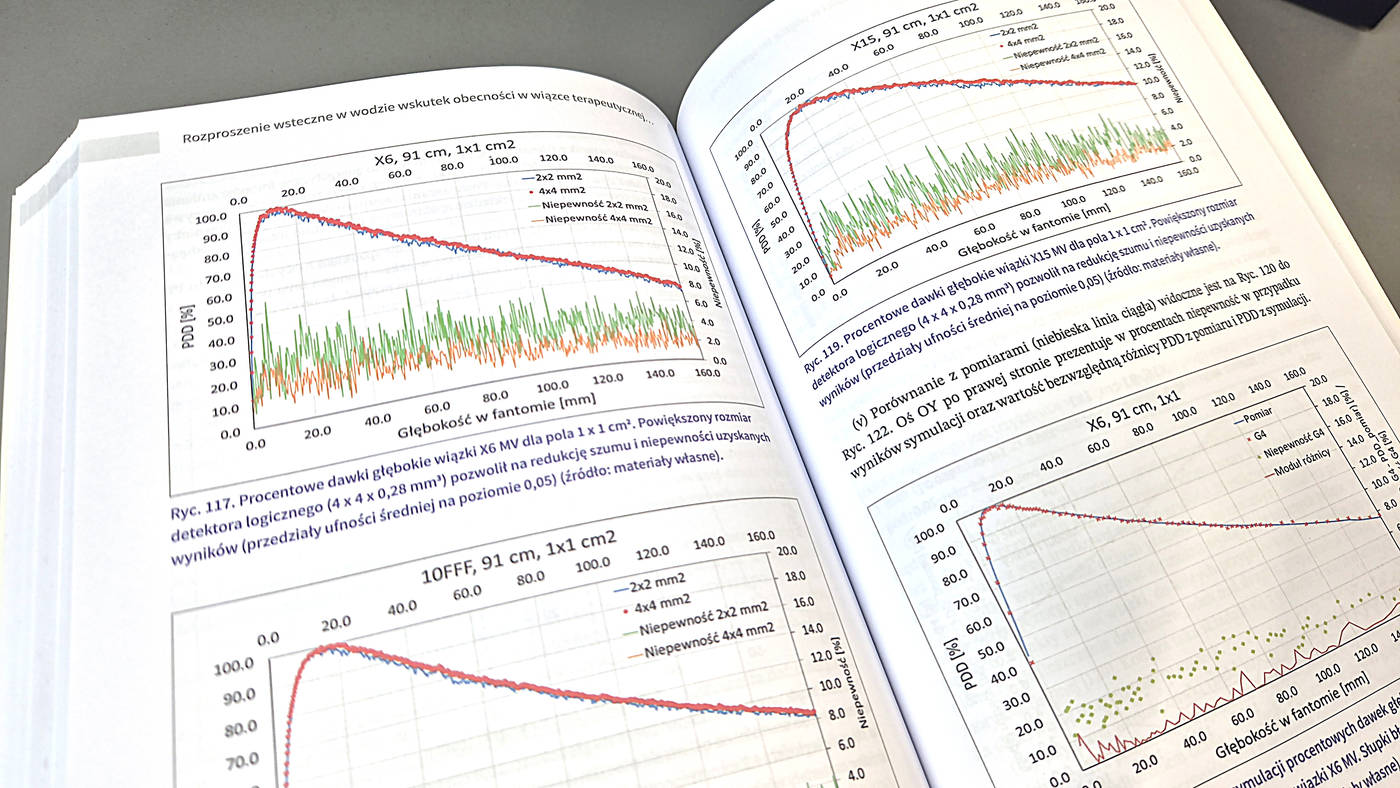
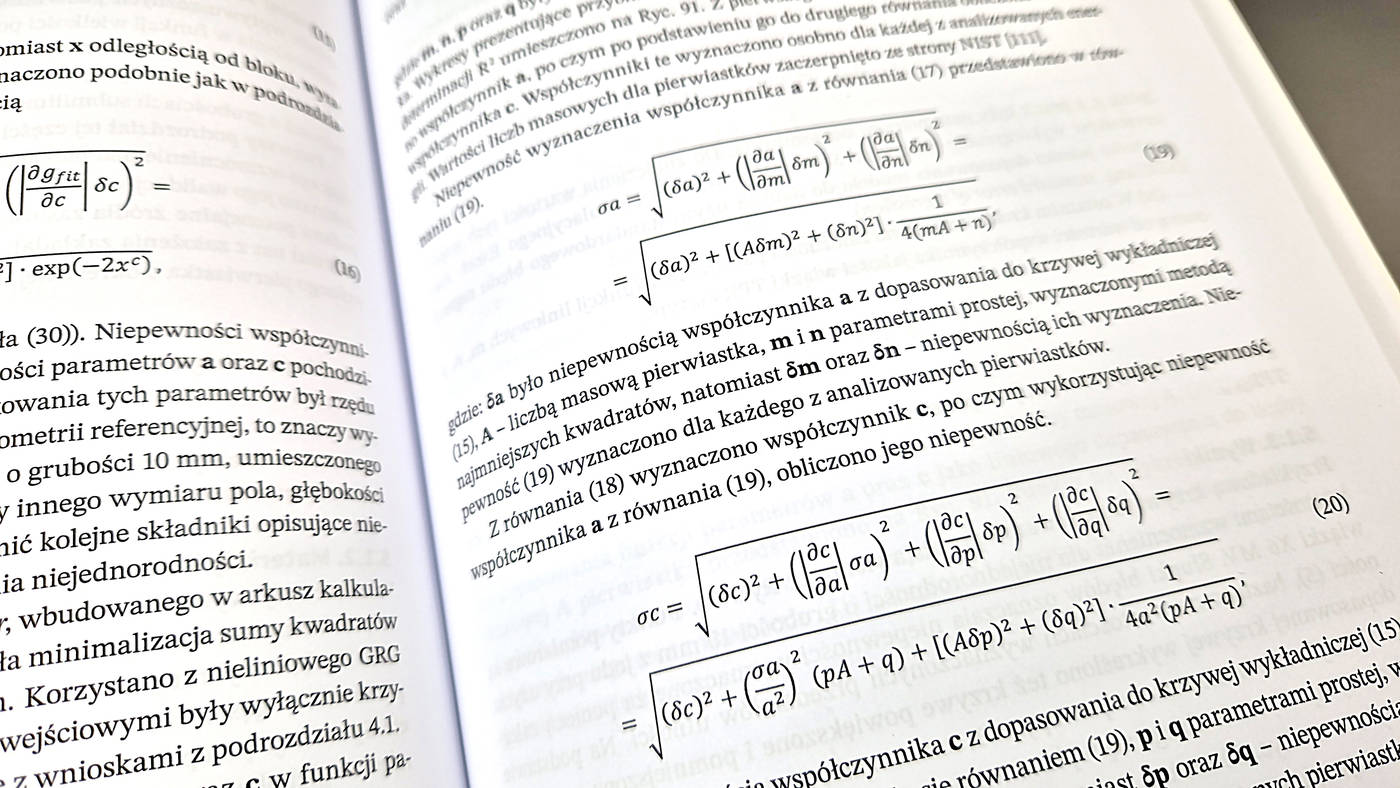
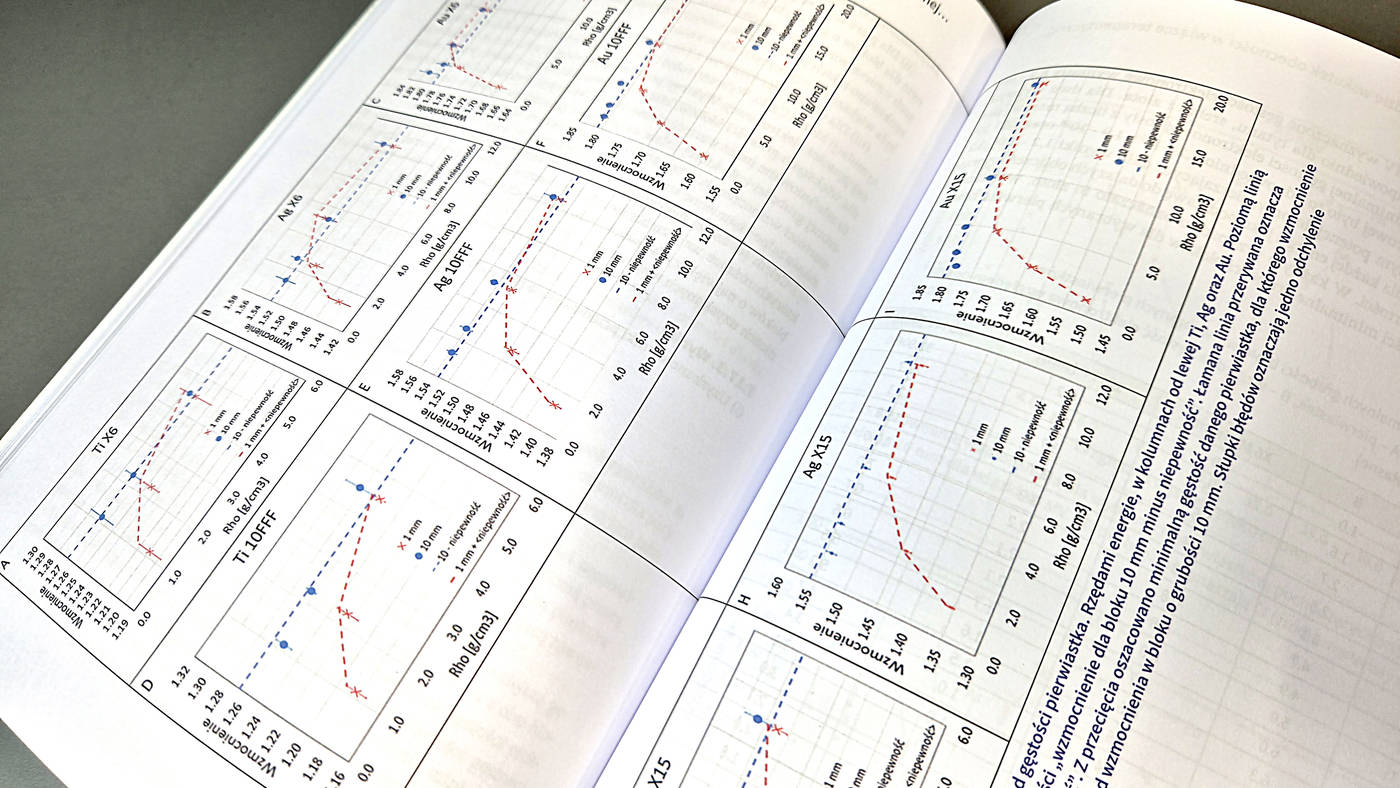
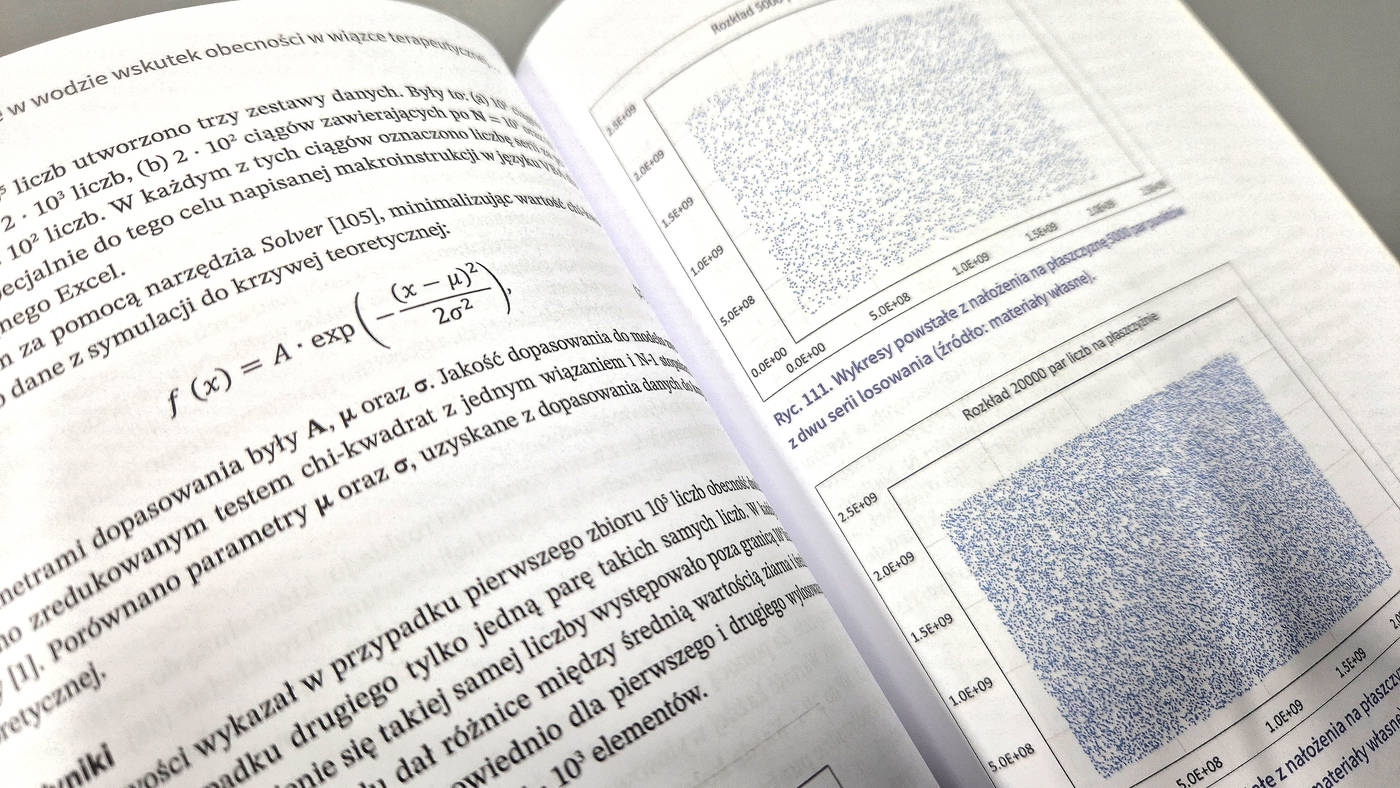
A scholarly work differs from a popular book primarily in the density of its critical apparatus. A doctoral dissertation in the field of law can have several dozen footnotes per page. A textbook in the exact sciences contains hundreds of formulas, tables, and diagrams. A collective work combines texts from over a dozen authors, each of whom used a slightly different writing convention. In each of these cases, typesetting scholarly works requires organizing the material so that the reader can smoothly navigate between the main text, footnotes, tables, and bibliography.
Professional typesetting of doctoral dissertations and habilitation monographs requires not only proficiency in using the software but, above all, knowledge of the editorial conventions appropriate to a given discipline. Typesetting a doctoral dissertation in legal sciences, where the footnote apparatus is sometimes more extensive than the main text, is different from typesetting a thesis in natural sciences, dominated by charts, diagrams, and descriptions of research procedures. The experience gained from hundreds of doctoral and habilitation works allows us to immediately select the right typographic solutions instead of searching for them by trial and error.


University presses, academic discipline councils, and habilitation committees have specific expectations regarding page format, font size, title page layout, bibliography format, and chapter numbering. When typesetting doctoral dissertations, we pay particular attention to compliance with the requirements of the specific university. If the university provides guidelines, we adhere to them strictly. If there are no guidelines, we propose solutions in line with accepted editorial standards.
Authors of doctoral dissertations and habilitation theses often provide material with inconsistent formatting: successive chapters written at different times, tables copied from spreadsheets, low-resolution charts, bibliography in several conventions at once. Typesetting scholarly works consists of giving this material a consistent typographic form without interfering with its substantive content.
In habilitation monographs, we encounter all popular citation styles: APA, Chicago, Harvard, Vancouver, as well as styles specific to individual publishers. We standardize the format of bibliographic descriptions, verify the completeness of data (author, title, year, pages, DOI), and check whether each entry has a corresponding cross-reference in the text.
More than a dozen authors mean more than a dozen different formatting styles, different conventions for writing surnames in footnotes, inconsistent abbreviations, and terminological discrepancies. The typesetting and technical editing of such a publication require systematic standardization, after which the reader will not recognize the boundaries between the chapters of different authors.


Not every doctoral dissertation or monograph can be typeset using only standard software functions. Scholarly works with hundreds of footnotes require precise management of numbering and pagination so that the footnote and the text it refers to end up on the same page. Tables extending over several pages must have repeated column headers. Mathematical formulas need a consistent system of numbering and alignment. Subject and author indexes require automation, as manual verification of hundreds of entries in a 300-page publication is too time-consuming and prone to errors.
We create proprietary scripts to automate repetitive operations: generating indexes, renumbering footnotes after text changes, conditional table formatting, converting citation styles between conventions. This allows us to maintain typesetting consistency even in publications numbering several hundred pages, where manual control of every element would be impractical.
A separate challenge involves multi-page tables in economics and medical publications. A table that stretches over three or four pages must have repeated column headers, clear continuation markings, legible dividing lines, and explanations for statistical markings. We typeset such tables manually, controlling every page break so that the data does not lose its context.


We typeset doctoral dissertations, habilitation monographs, collective works, and academic textbooks from the humanities, social sciences, law, economics, and exact sciences. We work with university presses, research institutes, scientific societies, and authors preparing doctoral dissertations for publication independently.
Among the scholarly works we have typeset are doctoral and habilitation theses in the fields of history, sociology, economics, law, medicine, biology, chemistry, and technical sciences. Each discipline brings different typographic challenges: legal sciences require extensive footnotes and precise references to legal acts; exact sciences demand formulas and tables with numerical data; while the humanities call for careful work with quotations, translations, and critical apparatus.
Regardless of the discipline and volume, we apply the same quality control standard: verifying the consistency of styles throughout the publication, controlling text pagination, checking numbering and cross-references, and running preflight before sending to the printing house. We provide scholarly typesetting services remotely for clients from all over Poland, as well as for international publishers.


We start our cooperation by familiarizing ourselves with the material: we assess the volume, structure, number, and type of non-text elements. On this basis, we prepare a quote and a schedule, taking into account correction rounds and time for author's revisions. After accepting the terms, we configure the layout, the style system, and page templates, and then proceed with the actual typesetting.
The material is usually delivered in stages: first the main text, then tables and illustrations, and finally the bibliography and indexes. We work to this rhythm, but we ensure that each stage ends with an internal quality control check. After typesetting the whole text, we carry out a full technical edit: we verify formatting consistency, check numbering and cross-references, and control page breaks and word hyphenation. The final step is preflight and preparing the production files for print.
In the case of permanent cooperation with a publisher, the process is shorter: we have ready-made templates and know the requirements of the title, so the typesetting of subsequent publications in a series goes more smoothly. We maintain libraries of styles, typefaces, and graphic elements that ensure visual consistency between subsequent volumes.
We design publication layouts for a wide range of editorial formats, primarily for trade and industry magazines. Our portfolio includes over twenty published titles, each prepared with meticulous attention to the specifics of its subject matter.
We create beautifully typeset books that are a pleasure to read. We specialize in the design and layout of complex academic, legal, and industry publications containing tables, charts, diagrams, and mathematical formulas.
Professional typesetting of books, magazines, catalogues, and reports in Adobe InDesign. Text layout, table and chart formatting, technical editing, and prepress file preparation. We specialize in publications with complex typographic structures.
Our team includes experienced editors and meticulous proofreaders — the most attentive readers a text can have. Their linguistic sensitivity and exceptional thoroughness ensure every publication receives the highest standard of editorial care.
We create engaging reports that influence business decisions: from concise one-pagers to comprehensive analyses. We select the appropriate format for the specific content and audience needs. We combine solid research methodology with clear visual presentation.
We know which questions to ask to arrive at distinctive and functional typographic solutions — for large corporations and small businesses alike, wherever the right typeface choice makes a measurable difference.
We support developers, especially front-end developers. We design and program responsive and interactive website typography along with accessibility principles. We create HTML, CSS, and JavaScript code compliant with specifications.
Using tools for content analysis, complex text pattern matching, and conditional transformation of styles and formats, we build systems that streamline the publication layout process and reduce both effort and turnaround time.
We provide Adobe Creative Cloud training for companies and institutions, combined with typography and design principles. We also conduct UX audits and expert usability analyses of online products and printed publications.
The cost of typesetting a doctoral dissertation or monograph depends on the volume of the publication, the degree of typographic complexity (tables, formulas, charts), and the scope of work. A 200-page doctoral dissertation without mathematical formulas requires a different budget than a habilitation thesis with hundreds of footnotes and multi-level tables. After reviewing the material, we prepare a free quote, usually within one business day.
Yes. We have worked with many university and academic publishers in Poland. We know the typical requirements regarding format, margins, citation styles, and publication structure. If the university or publisher provides guidelines, we adhere to them strictly. If not, we propose solutions in line with accepted editorial standards.
A monograph with a volume of 200–300 pages usually takes from three to six weeks, depending on the complexity of the material and the number of correction rounds. Works with an extensive scholarly apparatus, multiple tables, or mathematical formulas may require more time. We set a detailed schedule after reviewing the material.
Yes. We typeset mathematical, chemical, and logical formulas. We work both with material provided in LaTeX and with formulas entered in Word (MathType, equation editor). We ensure consistent notation, alignment, and numbering of formulas throughout the publication.
We most often work with Word (.docx) files. We also accept LaTeX (.tex), RTF, and OpenDocument files. Please provide graphics separately at a minimum resolution of 300 dpi (TIFF, EPS, AI, PSD). We send a detailed specification before starting work.
Yes. Technical editing is an integral part of our service. It includes standardizing the chapter structure, verifying the consistency of footnotes and bibliography, controlling the numbering of tables and illustrations, as well as checking the correctness of internal cross-references.
Yes. Typesetting doctoral dissertations is one of our core services. We prepare PhD theses in accordance with the requirements of the university and publisher: we select the format, title page layout, bibliography style, and footnote system. We work both with individual doctoral candidates and with university presses publishing series of doctoral dissertations.
kontakt@typograficznie.pl +48 608 271 665
Marcin Szewczyk-Wilgan → 
Wrocław, Poland
Tax ID (NIP): PL6391758393


